
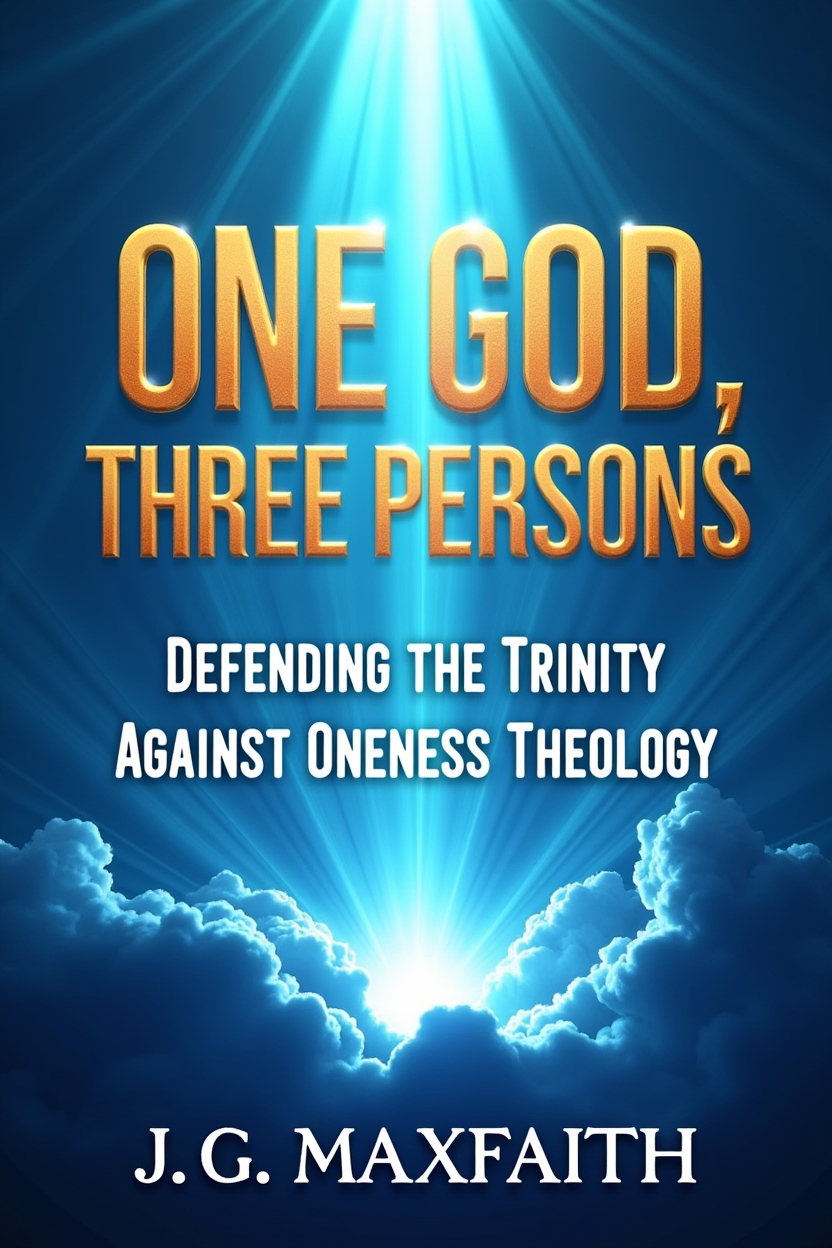
One God, Three Persons: Defending the Trinity Against Oneness Theology
$37.00$27.00
Contending for the Faith Once Delivered to the Saints
Who is God? This is the most foundational question anyone can ask—and how we answer it defines not only our theology, but our worship, our salvation, and our very identity as believers. Throughout church history, few doctrines have been more defining—and more debated—than the nature of God as revealed in Scripture.
The Christian faith has long upheld the doctrine of the Trinity: one God in three eternal, co-equal persons—Father, Son, and Holy Spirit. This is not a man-made invention, but a truth revealed progressively throughout the pages of the Bible and affirmed by the early Church under the guidance of the Holy Spirit.
Yet today, as in the past, alternative teachings continue to challenge this core doctrine. Among the most prominent is Oneness theology, which claims that God is not three persons, but one person who manifests Himself in different roles or "modes"—often summarized as Jesus being the Father, the Son, and the Holy Spirit. Though it appeals to monotheistic simplicity and bears the name of Jesus prominently, Oneness theology ultimately denies the relational nature of the Godhead and collapses biblical distinctions that are vital to a right understanding of Scripture.
This book is written as a biblical, theological, and historical response to the claims of Oneness theology. As a committed Trinitarian, I do not write to attack those who hold a Oneness view, many of whom are sincere and passionate about their faith. Rather, I write to contend for the truth—to demonstrate, with reverence and love, that the God of the Bible is not a solitary person wearing different masks, but a tri-personal God who exists in eternal communion and invites us into relationship with Him.
Each chapter in this book unpacks different aspects of the debate:
What does the Bible actually say about the Father, Son, and Spirit?
How did the early church understand God’s nature?
Why does the Trinity matter for salvation, worship, and daily Christian life?
You’ll also find clear explanations of common prooftexts used by Oneness advocates, as well as thoughtful responses grounded in Scripture and guided by the wisdom of the Church through the ages.
Whether you're a student, a pastor, a curious believer, or someone from a Oneness background seeking clarity, my prayer is that this book will deepen your understanding, strengthen your faith, and lead you closer to the Triune God who is eternally love, eternally holy, and eternally true.
Let us enter this sacred conversation with humility, courage, and an unshakable commitment to the Word of God.
J.G. MAXFAITH